


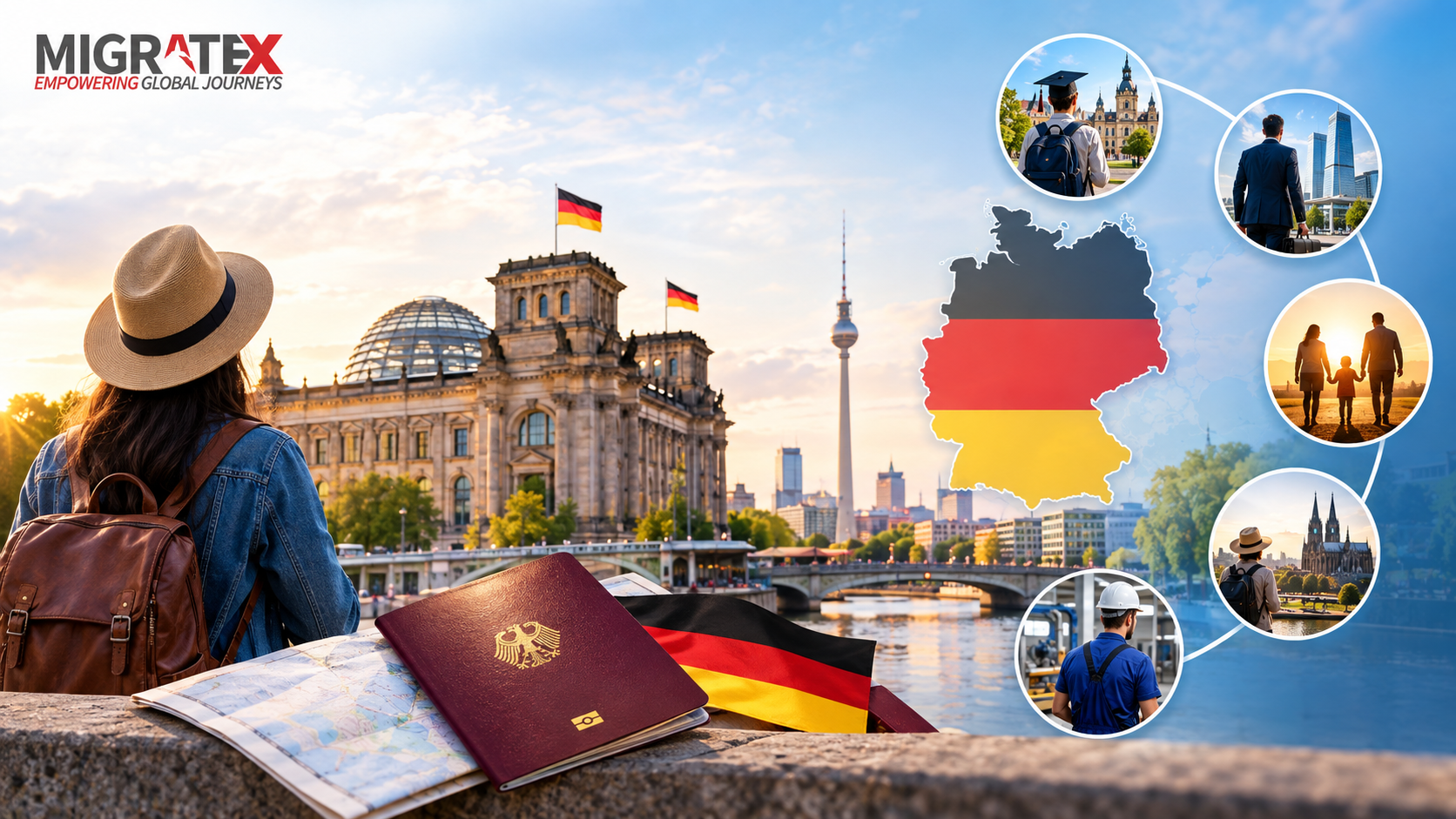
Germany has become a destination of interest for skilled professionals, international students and families looking to build a future in Europe. With opportunities across industries, educational institutions and different immigration pathways, many people are exploring how they can move to Germany.
However, there is no single visa that suits everyone. The right German visa depends on your purpose of moving, qualifications, professional experience, employment situation and individual eligibility.
Whether you want to work in Germany, search for a job, pursue higher education or join your family, understanding the available visa categories is an important first step.
If you are researching your options with an immigration consultant for Germany in Bangalore, this guide explains the main German visa pathways and who they may be suitable for.
1. Germany Work Visa for Skilled Professionals
The German skilled worker visa is designed for qualified professionals who want to take up employment in Germany.
Depending on your qualifications, you may be eligible for a residence visa based on recognised vocational training or a university degree.
This route may be relevant for professionals in fields such as engineering, IT, healthcare and other skilled occupations, subject to the applicable requirements.
Who may consider this visa?
- Professionals with recognised vocational qualifications
- Graduates with relevant academic qualifications
- Applicants who have secured a suitable job offer in Germany
The specific requirements depend on your qualification, job and intended occupation.
2. EU Blue Card Germany
For eligible highly qualified professionals
The EU Blue Card is a residence title for qualified professionals from outside the EU who intend to work in Germany in a qualifying position.
Applicants generally need a qualifying university or tertiary qualification, or must meet the specific alternative requirements available to certain IT professionals, along with a suitable employment offer and the applicable salary threshold.
The EU Blue Card may also provide a pathway to permanent settlement if the relevant conditions are met.
Who may consider it?
- University graduates with a qualifying job offer
- Professionals offered employment that meets the applicable salary requirements
- Eligible IT specialists who meet the alternative experience requirements
The salary thresholds and eligibility rules vary by category and can change. Check the current official requirements before applying.
3. Germany Opportunity Card (Chancenkarte)
For eligible applicants who want to search for a job
The Germany Opportunity Card allows eligible non-EU nationals to enter Germany to look for qualified employment.
One route is for applicants whose qualifications meet the relevant skilled-worker recognition requirements. Another route uses a points-based system.
Depending on the route, applicants may need to demonstrate qualifications, language skills, professional experience and sufficient financial resources.
The Opportunity Card can generally be issued for up to one year initially. It also allows eligible holders to work part-time for up to 20 hours per week and undertake limited trial employment.
Who may consider it?
- Skilled professionals who have not yet secured a job in Germany
- Applicants with qualifying academic or vocational qualifications
- Candidates who meet the applicable points-based criteria
The Opportunity Card is a job-search pathway, not a guarantee of employment or permanent residence.
4. Germany Visa for Professionals with Work Experience
Germany also has a route for certain applicants with substantial practical professional experience and a foreign qualification.
Under this pathway, some professionals may qualify for employment in a non-regulated occupation without having their qualification formally recognised in the same way as required under other skilled-worker routes.
Applicants must still meet the applicable qualification, experience, employment and other requirements.
Who may consider it?
- Experienced professionals with a relevant vocational or academic qualification
- Applicants seeking employment in an eligible non-regulated occupation
- Candidates who meet the specific requirements of this visa category
This route may be worth exploring if you have professional experience but your qualification does not follow the standard recognition pathway.
5. Germany Student Visa
For higher education and academic opportunities
Germany offers visa pathways for international students who wish to study at a recognised educational institution.
Depending on your situation, you may apply for a visa to pursue a degree, attend a preparatory course or enter Germany to seek a university place.
Applicants need to meet the relevant admission, financial, educational and other visa requirements.
Who may consider it?
- Students admitted to a German university
- Applicants undertaking an eligible preparatory course
- Students who meet the requirements to enter Germany to seek a university place
A study visa is intended for education. Any later transition to employment or another residence status depends on meeting the relevant requirements.
6. Germany Vocational Training Visa (Ausbildung)
Germany’s vocational training pathway allows eligible applicants to undertake professional training that combines practical experience with structured learning.
There are visa options for people who have secured a vocational training place and, under specific conditions, for those entering Germany to search for a training position.
This route may be relevant to people who want to develop professional skills through Germany’s vocational education system.
Who may consider it?
- Applicants with a confirmed vocational training offer
- Candidates who meet the requirements for seeking a training position
- Individuals who satisfy the applicable educational, language and financial criteria
The requirements depend on the specific training pathway.
7. Germany Family Reunification Visa
For eligible family members joining relatives in Germany
The family reunification visa allows certain family members to join a relative who is living in Germany.
Common pathways include visas for spouses and children joining family members who already reside in Germany. Specific provisions may also apply to parents joining children in certain circumstances.
Eligibility depends on the relationship, the sponsor’s residence status and the applicable requirements.
Who may consider it?
- Spouses joining an eligible partner in Germany
- Minor children joining their parents
- Eligible parents joining their children
Applicants should check the requirements for their particular family relationship and the residence status of the person they intend to join.
8. Germany Research Visa
Germany also has immigration routes for eligible researchers who intend to carry out research activities in the country.
The appropriate visa or residence route depends on the research arrangement, the host institution and the applicant’s circumstances.
This option may be relevant to researchers, academic professionals and individuals with a qualifying research agreement or hosting arrangement.
Applicants should check the relevant German mission’s requirements for research-related stays.
Which German Visa Is Right for You?
The right option depends on your profile and reason for moving.
| Your situation | Visa pathway to explore |
| You have a qualifying job offer | Skilled Worker Visa |
| You have a qualifying job offer and meet the specific criteria | EU Blue Card |
| You want to search for a job in Germany | Opportunity Card |
| You have relevant practical experience | Visa for professionally experienced workers |
| You want to pursue higher education | Student Visa |
| You want to undertake vocational training | Vocational Training Visa |
| You want to join eligible family members | Family Reunification Visa |
| You have a qualifying research opportunity | Research Visa |
These are general starting points. The appropriate route depends on the current rules and your individual eligibility. Germany’s official immigration portal provides an overview of visa categories and their requirements.
What Documents Are Generally Required for a German Visa?
The documents you need depend on the visa category. However, applicants may be asked to provide:
- A valid passport
- Completed visa application
- Proof of qualifications and education, where applicable
- Employment contract or job offer, if required
- Proof of financial resources, where applicable
- Health insurance documentation
- Proof of accommodation or other supporting documents, if required
- Language certificates, where applicable
Always follow the official checklist for your specific visa category and the German mission responsible for your place of residence.
For applicants residing in India, the German Missions’ official website provides information about national visas for stays exceeding 90 days.
Looking for an Immigration Consultant for Germany in Bangalore?
Choosing a German visa pathway involves more than selecting a category. You need to understand how your education, work experience, employment plans and long-term goals align with the relevant requirements.
At Migratex Global Consultants, applicants can explore German immigration pathways and understand the steps involved in preparing their applications.
Whether you are considering a Germany Work Visa, EU Blue Card, Opportunity Card or another route, understanding the available options can help you make informed decisions about your international journey.
If you are searching for an immigration consultant for Germany in Bangalore, connect with Migratex to discuss your profile and explore the pathways relevant to your goals.
Migratex Global Consultants
 Call: 973-973-8883
 Website: migratex.in
 Email: info@migratex.in
Note: Visa eligibility and requirements are determined by the relevant German authorities. Applicants should verify current rules through official sources before applying.
Frequently Asked Questions (FAQs)
1. What are the different types of German visas for immigration?
Germany offers several long-stay visa pathways, including skilled worker visas, the EU Blue Card, Opportunity Card, student visas, vocational training visas, family reunification visas and certain research-related routes.
2. Which German visa is suitable for skilled workers?
Skilled professionals may explore the Skilled Worker Visa or EU Blue Card, depending on their qualifications, job offer, salary and other eligibility requirements.
3. Can I move to Germany without a job offer?
Eligible applicants may be able to apply for the Germany Opportunity Card to search for employment. Applicants must meet the relevant qualification, financial and other requirements.
4. What is the Germany Opportunity Card?
The Opportunity Card is a residence pathway that allows eligible non-EU nationals to enter Germany to search for qualified employment. It has both a recognised-qualification route and a points-based route.
5. Is the EU Blue Card a permanent residence visa?
No. The EU Blue Card is a residence title for qualifying employment. Eligible holders may later apply for a settlement permit if they meet the applicable conditions.
6. Can I take my family to Germany on a work visa?
Eligible family members may be able to join you through family reunification. The requirements depend on your residence status and the circumstances of your family members.
7. How can I apply for a German visa from India?
You should identify the appropriate visa category, review the official document checklist, prepare your application and follow the procedure of the German mission responsible for your place of residence.
8. Can an immigration consultant for Germany in Bangalore help with the process?
An immigration consultancy can help you understand potential visa pathways, review documentation requirements and prepare for the application process. Always verify the provider’s services and any applicable professional authorisation.