Categories
immigration consultant for germany

How can I get a job after completing your studies in Germany?

If you’re finishing your studies in Germany and want to build your career there, the process is straightforward—but strategic. After graduation, you can extend your stay by switching your student visa to a Job Seeker Visa, which is valid for up to 18 months. During this period, you can look for employment aligned with your academic background and skills. Once you secure a relevant position, you can move forward with a work visa or apply for the EU Blue Card to settle and work in Germany long term. Many students take support from professional advisors such as the best consultant for Germany Job Seeker Visa in Bangalore to ensure smooth visa and documentation processing.

Steps to Get a Job in Germany for Graduates

Step 1: Apply for a Job Seeker Visa.
After completing your degree, submit your application to stay in Germany while you look for work.

Step 2: Build a professional application portfolio.
Create a German-style CV, targeted cover letter, and include certificates, transcripts, and qualifications.

Step 3: Search actively on trusted platforms.
Use job portals such as LinkedIn, Indeed, Stepstone, and Make-it-in-Germany to track relevant openings.

Step 4: Aim for high-demand sectors.
Fields like IT, engineering, healthcare, science, and finance have a high need for skilled workers and provide strong career entry pathways for graduates.

Step 5: Ensure your degree is recognised.
For many job roles, official recognition of your academic credentials is required.

Step 6: Strengthen your German language skills.
While you can find English-speaking jobs, knowing German significantly increases your chances and helps you integrate professionally.

Step 7: Apply widely and attend interviews.
Persistence is key—be proactive with applications and follow-up communication.

Step 8: Apply for a work visa or EU Blue Card after securing employment.
Once you have a valid job offer with required salary and qualifications, transition smoothly to a long-term residence work permit.

Documents Required for Applying to Jobs / Visa in Germany

  • Valid passport
  • Completed visa application form
  • Biometric passport photos
  • Proof of accommodation
  • Health insurance coverage
  • Proof of financial support
  • Updated CV and cover letter
  • Academic certificates and transcripts

Job Opportunities in Germany for International Graduates

Germany currently has hundreds of thousands of open positions, with continuing shortages expected across multiple sectors. The country is actively inviting international talent to strengthen its workforce—particularly from STEM and medical fields. With a growing gap estimated to reach up to 7 million skilled workers by 2035, now is an excellent time for international students to launch their careers in Germany.

How to Apply for a Job Seeker Visa

  1. Complete your degree from a recognized German institution.
  2. Apply at your local Ausländerbehörde (Foreigners’ Office) before your current visa expires.
  3. Collect required documents such as passport, health insurance, academic records, and residence permit.
  4. Submit your application.
  5. Pay the processing fee (approximately €75).
  6. Await approval.
  7. Once granted, you can remain in Germany up to 18 months to find a job in your field.

Transitioning from Job Seeker Visa to EU Blue Card

After obtaining a job offer that meets eligibility criteria and salary thresholds, graduates can apply for the EU Blue Card, an EU-wide residence permit for highly qualified professionals. This provides a pathway to long-term settlement, career advancement, and eventually permanent residency. Many applicants choose to work with the best consultant for Germany Job Seeker Visa in Bangalore to improve their application success rate and streamline the process.

Looking for Guidance? We’re Here to Help.

If you need assistance with visas, job searching, document preparation, or relocating to Germany—Migratex Global Consultant is ready to support you every step of the way.

Talk to our experts today and start building your future in Germany!
Contact us to get personalized consultation and professional guidance.
Categories
immigration consultant for germany

Top Courses in Demand to Study in Germany

Germany has long been recognized as the heart of Europe — not just for its innovation and technology, but also for its academic excellence. Every year, thousands of international students choose Germany as their study destination for its globally respected education system, affordable tuition, and strong job prospects.

Whether you want to design intelligent machines, lead a business, or make scientific discoveries that shape the future — Germany offers the perfect environment to turn your ambitions into reality.

Let’s explore some of the most in-demand courses in Germany that are shaping tomorrow’s global workforce.

Why Study in Germany?

Studying in Germany is more than just earning a degree — it’s about experiencing quality, diversity, and opportunity.

Germany offers affordable or tuition-free education in many public universities, making it accessible to students from all backgrounds. The degrees are recognized worldwide, and programs often emphasize research, innovation, and real-world experience.

International students also benefit from internship opportunities with leading companies like BMW, Siemens, and Bosch, giving them a head start in their careers. After graduation, Germany’s post-study work visa allows you to stay for up to 18 months to find employment — and with the right pathway, you can even settle permanently.

Beyond academics, Germany offers a vibrant multicultural environment, safe cities, and a high quality of life — making it a truly rewarding destination for global learners.

1. Computer Science & Information Technology

With digitalization transforming every industry, Computer Science has become one of the top choices for international students in Germany. From Artificial Intelligence and Cybersecurity to Data Analytics and Software Engineering, students gain hands-on experience in the technologies driving the modern world.
Career Scope: Tech startups, research labs, software firms, and global IT companies.

2. Engineering

Germany’s engineering legacy is world-renowned — a country where innovation meets precision. Whether it’s Mechanical, Electrical, Civil, or Industrial Engineering, German universities blend theory with practical training, preparing students for global careers in infrastructure, manufacturing, and technology.
Career Scope: Renewable energy, automotive design, robotics, and advanced manufacturing.

3. Medicine & Healthcare

Germany’s medical and healthcare programs are globally respected for their research focus and advanced infrastructure. Students gain deep clinical knowledge and practical exposure through hospitals and labs, making it an ideal choice for those passionate about improving lives.
Career Scope: Hospitals, biomedical research, pharmaceutical industries, and healthcare startups.

4. Business Administration & Management

Germany’s stable economy and global corporate presence make it a thriving destination for Business and Management studies. The programs focus on leadership, entrepreneurship, and sustainability — skills that modern businesses value most.
Career Scope: International business, marketing, consulting, and finance.

5. Renewable Energy & Environmental Science

As the world moves toward sustainability, Germany stands at the forefront of the green revolution. Courses in Renewable Energy, Environmental Management, and Sustainable Engineering train students to find solutions for climate change and energy efficiency.
Career Scope: Clean energy firms, environmental research, policy organizations, and NGOs.

6. Automotive & Robotics

Germany’s reputation in the automotive industry is unmatched, and now it’s merging with the world of robotics and automation. Students studying Automotive Engineering or Robotics explore cutting-edge areas such as self-driving vehicles, AI-driven manufacturing, and smart mobility.
Career Scope: Automobile companies, robotics engineering, and industrial automation.

7. Architecture & Design

Germany beautifully blends history with modern innovation — and so does its Architecture and Design education. Students learn to create sustainable, aesthetic, and functional spaces inspired by Europe’s rich cultural heritage.
Career Scope: Architecture firms, interior design studios, and urban development projects.

Final Thoughts

Germany is not just a place to study; it’s a place to grow — academically, professionally, and personally. Whether your dream is to innovate, lead, or care for others, Germany provides the right environment to make it happen.

 Want to Study or Settle Abroad?
If you’re planning to apply for a study visa or Permanent Residency (PR), professional guidance can make the process smoother and more successful.
Contact Migratex Study Abroad — for expert advice on the best immigration service in Bangalore and a clear roadmap to achieving your global goals.

Categories
immigration consultant for germany

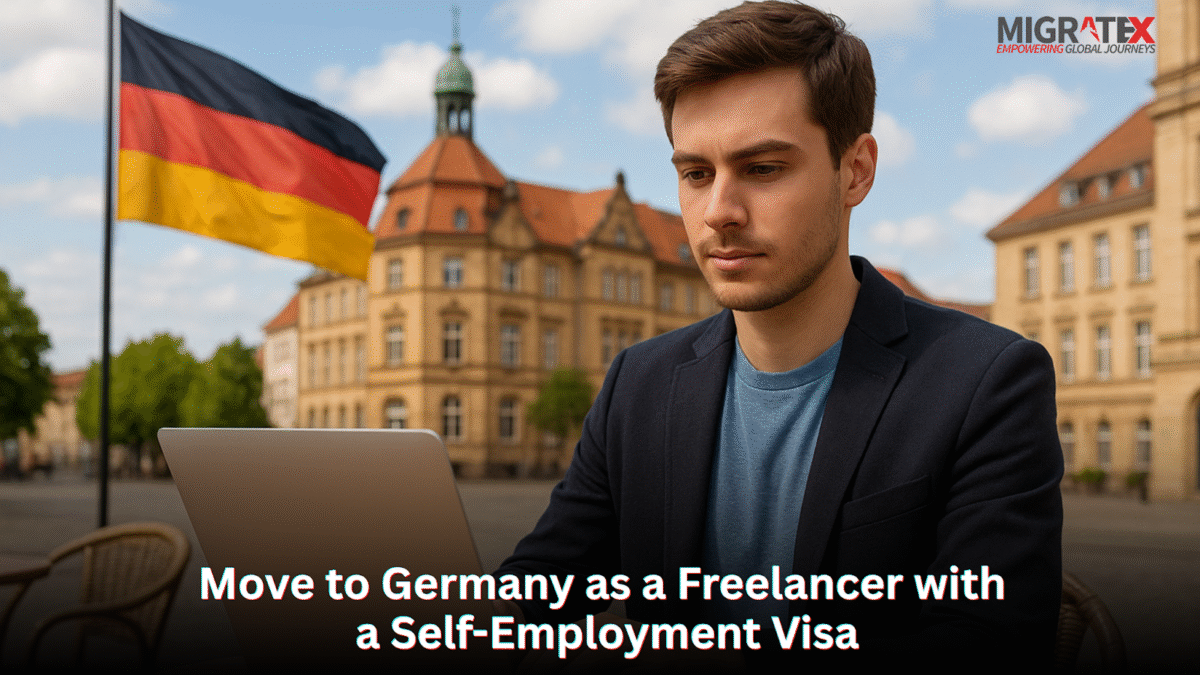
Dreaming of Working in Germany? Get Your Freelance Self-Employment Visa Today


Germany is one of the best countries in Europe for freelancers who want to build a career independently. The country offers a Freelancer Visa, officially known as the Self-Employment Visa, which allows non-EU nationals to live and work in Germany without being tied to an employer.

There are two types of visas under this category:


      • Freiberufler Visa – for freelance professionals (writers, artists, teachers, IT professionals, etc.)

      • Selbständiger Visa – for business owners or entrepreneurs who wish to set up their own venture.

    The German Freelancer Visa is usually issued for up to 3 years and can be extended further. Over time, it also acts as a pathway to permanent residency, as you can apply for a settlement permit after 3–5 years of residence and work in Germany. The application fee is around €75.


    Requirements for a German Freelance Visa

    To apply for a German Freelance Visa, you need to prepare the following documents:


        • A valid passport (at least 6 months validity)

        • Two recent passport-sized photos

        • Completed visa application form

        • Proof of funds (minimum €10,000) or a sponsorship letter

        • Proof of health insurance

        • Educational qualifications (degree/diploma)

        • Professional experience certificates

        • Updated CV/resume

        • Proof of accommodation in Germany

        • Visa fee payment receipt

        • Pension/retirement plan if above 45 years

      Additional for Business Owners:


          • A detailed business plan

          • Proof of funds to support the business

          • Business registration with the Trade Register

        📝 Steps to Apply for a German Freelancer Visa
        Follow these steps to apply for the visa smoothly:

        Step 1: Check your eligibility for the Freelancer Visa
        Step 2: Collect all required documents (as listed above)
        Step 3: Book an appointment at the German embassy or consulate
        Step 4: Attend the visa interview, submit documents, and pay the fee (€75)
        Step 5: Wait for processing (average time: 6–10 weeks)

         FAQs on German Freelancer Visa

        1. How long is the German Freelancer Visa valid?
        It is generally valid for up to 3 years and can be extended.

        2. Can I apply for PR with this visa?
        Yes, after 3–5 years of living and working in Germany, you can apply for permanent residency.

        3. What is the cost of the visa?
        The visa application fee is around €75.

        4. Who can apply for the Freelancer Visa?
        Freelancers such as writers, designers, IT professionals, teachers, and entrepreneurs can apply if they meet the eligibility criteria.

        5. How long does the processing take?
        On average, visa approval takes between 6–10 weeks.

         Want to start your freelance journey in Germany? Connect with the trusted immigration consultant in BangaloreMigratex Global Consultants – and let experts handle your visa process from start to finish.

        Categories
        immigration consultant for germany

        When is the Best Time to Apply for a Job in Germany?


        Germany has become one of the most attractive destinations for Indian professionals looking to build a global career. With its strong economy, shortage of skilled workers, and excellent work-life balance, thousands of Indians apply every year for a Germany work visa. But one question almost every job seeker asks is – “When is the best time to apply for a job in Germany?”

        If you’re planning your career move, knowing the right timing can make all the difference. As a trusted Germany work visa consultant in Bangalore, we guide candidates on not only the visa process but also on the best strategy to secure a job abroad.


        Understanding the German Job Market

        Before applying, it’s important to understand how the German hiring cycle works:

        • January – March: The start of the year is considered one of the best times to apply. Companies have fresh hiring budgets and actively look for new talent.
        • April – June: Still a good time, but some companies begin slowing down before the summer holidays.
        • July – August: These are usually slow months. Many HR managers and recruiters go on vacation, so interview responses might be delayed.
        • September – November: Another peak hiring season. Companies prepare to fill vacancies before the year ends, making this a golden time for job seekers.
        • December: Hiring is relatively slow due to Christmas and New Year holidays.

        Pro tip: If you’re serious about a German job, start preparing your documents at least 2-3 months in advance.

        Which Professions Are in High Demand in Germany?

        Germany faces a shortage of skilled professionals in multiple sectors. If you belong to one of these fields, your chances are higher:

        • IT & Software Development
        • Engineering (Mechanical, Electrical, Civil)
        • Healthcare & Nursing
        • Finance & Accounting
        • Data Science & AI
        • Hospitality & Tourism

        Applying at the right time, combined with in-demand skills, increases your chances of securing an offer.

        How Can a Consultant Help?

        Applying for a job in Germany involves more than just sending resumes. From preparing your job seeker visa application to ensuring your CV matches German standards, professional guidance matters.

        As a Germany work visa consultant in Bangalore, we provide:

        • Personalized career guidance for Germany
        • Step-by-step support for Germany job seeker visa
        • CV & cover letter preparation as per German format
        • Assistance with visa documentation and interview tips
        • Updates on the latest Germany work visa requirements

          Final Thoughts

        So, when is the best time to apply for a job in Germany? January–March and September–November are the peak seasons, but with the right preparation and guidance, you can apply any time of the year.

        If you are planning your career abroad and need expert assistance, connect with Migratex Global Consultant today. We’ll help you take the right steps towards a successful career in Europe.

        FAQ

        What is the best time to apply for a job in Germany?

        The best times to apply for a job in Germany are during the peak hiring periods, typically January-February and September-November, when many companies recruit new staff.

        Which professionals are in high demand in Germany?

        IT experts, engineers, healthcare professionals, finance specialists, and hospitality workers are highly sought after in Germany.

        Do I need a consultant to apply for a Germany work visa?

        While not mandatory, working with a Germany work visa consultant increases your chances of success by guiding you through documentation, job applications, and interview preparation.

        What are the typical requirements for a German work visa?

        The typical requirements for a German work visa include a valid job offer, relevant qualifications, and proof of language proficiency.

        How long does it take to process a German work visa application?

        The processing time for a German work visa application can vary, but it is generally recommended to apply well in advance, as it can take several weeks or even months for the application to be processed.

        What is the Germany Job Seeker Visa?

        The Job Seeker Visa allows skilled professionals from India to enter Germany and search for a job within 6 months.

        Ready to take the first step towards your Germany dream?

        Connect today at Migratex Global consultants Pvt. Ltd. – trusted visa consultants in Bangalore for a personalized consultation. Let us help you choose the right pathway, prepare a strong application, and move closer to building a successful career in Germany.

        Call us now: +91-9739738883
        book your free consultation to get started!